Jewelry
Jewelry, as an art form and an industry, is rich with history, cultural significance, and evolving trends. It’s far more than just adornment; it’s a statement, an investment, a symbol, and often, a piece of a story.
Here’s a deeper dive into the world of jewelry:
1. What is Jewelry?
At its core, jewelry refers to ornamental pieces, typically made from durable materials, worn by people for personal decoration. These items range from small, everyday pieces to elaborate, ceremonial adornments. The primary function of jewelry can be aesthetic, but it also often serves as:
- A symbol of status or wealth: Historically, the rarity and value of materials like gold, diamonds, or exotic pearls denoted social standing.
- A cultural or religious marker: Many cultures have specific jewelry worn for rituals, festivals, or as identifiers of tribal or religious affiliation.
- A personal expression: Jewelry allows individuals to express their personality, style, and even beliefs.
- A sentimental keepsake: Heirloom pieces, engagement rings, or gifts from loved ones carry deep emotional value.
- An investment: Fine jewelry, particularly with precious metals and large gemstones, can appreciate in value over time.
2. Materials Used in Jewelry
The variety of materials used in jewelry is vast, ranging from traditional precious metals and gemstones to innovative modern materials.
a. Metals:
- Precious Metals:
- Gold: The most iconic jewelry metal. Pure gold (24K) is too soft, so it’s alloyed with other metals for durability. Common karats include 22K (popular in India for its purity), 18K, 14K, and 10K. It comes in various colors like yellow, white (alloyed with white metals like palladium or nickel), and rose (alloyed with copper).
- Platinum: A rare, dense, and naturally white metal, highly prized for its durability, hypoallergenic properties, and resistance to tarnish.
- Silver: Usually used as Sterling Silver (92.5% silver, 7.5% copper) for durability. It’s more affordable than gold or platinum and can be polished to a brilliant shine. Prone to tarnishing.
- Palladium: A member of the platinum group, similar in appearance to platinum but lighter and more affordable.
- Alternative Metals:
- Stainless Steel: Durable, hypoallergenic, and affordable, often used for fashion jewelry and men’s pieces.
- Titanium: Extremely strong, lightweight, and hypoallergenic, ideal for modern, minimalist designs.
- Tungsten: Very hard and scratch-resistant, popular for men’s rings.
- Copper & Brass: Used in costume jewelry, often for their warm tones, but prone to tarnishing.
- Other Materials:
- Ceramic: High-tech, scratch-resistant, and lightweight.
- Wood, Shell, Bone: Used for their natural, organic aesthetic.
- Glass & Enamel: For vibrant colors and intricate decorative work (e.g., Meenakari).
- Leather, Fabric, Beads: Common in fashion and artisanal jewelry.
b. Gemstones:
- Precious Gemstones:
- Diamonds: Valued for their brilliance, fire, and hardness (the hardest known natural material). Graded by the 4 Cs: Carat, Cut, Color, and Clarity. Lab-grown diamonds are a significant and growing segment, offering ethical and often more affordable alternatives.
- Rubies: Known for their vibrant red hue, a symbol of passion and love.
- Sapphires: Most famous for their deep blue, but also come in a spectrum of “fancy” colors. Symbolize wisdom and royalty.
- Emeralds: Prized for their lush green color, symbolizing rebirth and love.
- Semi-Precious Gemstones: A vast category including amethyst, garnet, topaz, peridot, aquamarine, tourmaline, citrine, opal, jade, turquoise, and many more. Their value depends on color, clarity, cut, and rarity.
- Organic Gemstones:
- Pearls: Formed within mollusks, classic pearls are white, but they come in various colors and shapes. Modern trends favor irregular baroque pearls.
- Amber: Fossilized tree resin, known for its warm, golden-brown hues.
- Coral: Formed from marine polyps, typically red or orange.
3. Jewelry Manufacturing Process (Fine Jewelry)
Creating fine jewelry is a blend of artistry and precision engineering.
- Design: Ideas are sketched by hand or, more commonly today, created using CAD (Computer-Aided Design) software to produce detailed 3D models.
- Model Making (Wax/Resin): A physical model of the design is created, often using 3D printing with wax or resin.
- Casting (Lost-Wax Casting): The wax model is embedded in a plaster-like material. When heated, the wax melts away, leaving a cavity. Molten metal is then poured into this cavity, taking the shape of the jewelry.
- Fabrication & Assembly: The raw casting is refined. Excess metal is removed, and components (like clasps, settings for stones) are soldered or welded together.
- Stone Setting: Skilled artisans meticulously set gemstones into their designated places, using various techniques (prong, bezel, pave, channel, etc.).
- Finishing & Polishing: The piece is filed, sanded, and polished to achieve its final shine and smoothness.
- Quality Control: Each piece undergoes rigorous inspection to ensure craftsmanship, stone security, and overall quality.
4. Indian Traditional Jewelry Types
India boasts an incredibly rich and diverse heritage of jewelry, with distinct styles varying by region, culture, and historical influence.
- Kundan Jewelry: Originating from Rajasthan and the Mughal era, it involves setting carefully cut (but often unfaceted) gemstones, typically glass or semi-precious stones, in a gold foil base. Known for its regal and opulent look.
- Polki Jewelry: Similar to Kundan, but specifically uses uncut, raw diamonds, giving it a unique, earthy, and antique charm. Often seen in bridal sets.
- Meenakari Jewelry: A vibrant art form involving intricate enamel work. Artisans hand-paint designs with bright colors onto gold or silver, creating stunning, often floral or mythological motifs.
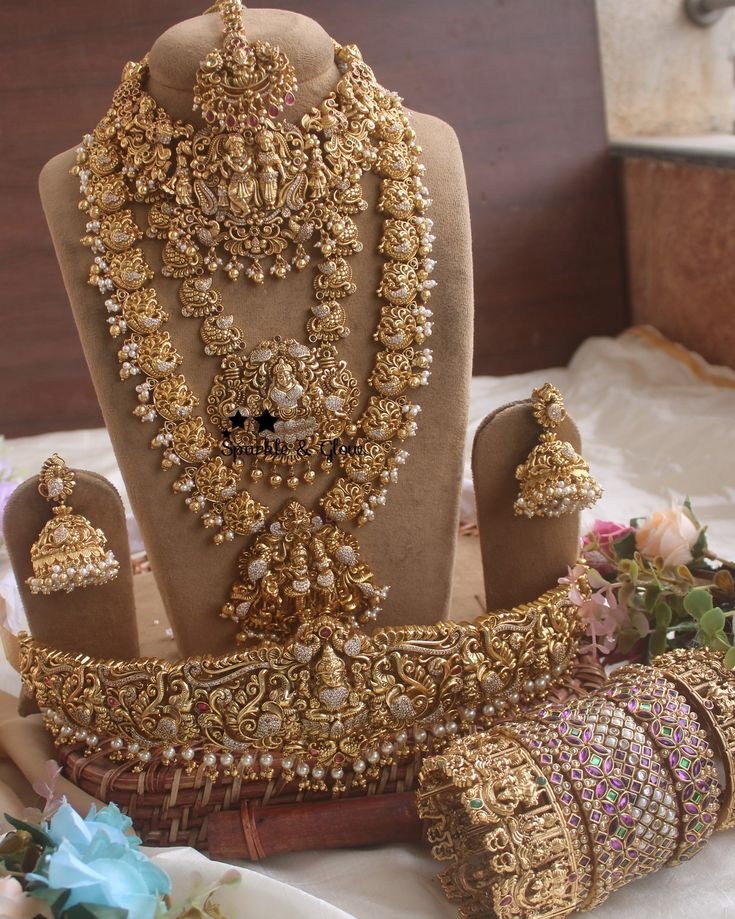
- Temple Jewelry: Hailing from South India, these pieces are inspired by deities and temple architecture. They feature intricate gold work with motifs of gods, goddesses, birds (peacocks), and flowers, often embellished with rubies, emeralds, and pearls.
- Jadau Jewelry: An ancient technique (Mughal-inspired) where precious and semi-precious stones are embedded into heated gold, which then solidifies to secure them. It results in heavy, ornate pieces often favored for special occasions.
- Thewa Jewelry: A unique art form from Rajasthan involving fusing intricate gold work onto colored glass.
- Navratna Jewelry: Features nine specific gemstones (diamond, ruby, emerald, yellow sapphire, garnet, blue sapphire, pearl, cat’s eye, and coral), believed to bring good luck and astrological benefits.
- Tribal/Folk Jewelry: Often made of silver, beads, wood, or other organic materials, these pieces reflect the distinct cultures and traditions of various Indian tribes (e.g., from Rajasthan, Gujarat, Northeast India, Odisha).
- Filigree (Tarakasi): Delicate metalwork where tiny beads or twisted threads of gold or silver are used to create intricate, lace-like designs (prominent in Odisha).
- Lac Jewelry: Especially popular in Rajasthan and Gujarat, involves molding lacquer into lightweight ornaments, often bangles, adorned with vibrant colors.
5. Symbolism in Jewelry
Many pieces of jewelry carry deeper meanings:
- Rings: Love, commitment, eternity (wedding/engagement rings), friendship, power, or status.
- Necklaces: Love, faith, protection, beauty, elegance.
- Bracelets: Friendship, power, status, or as talismans.
- Earrings: Beauty, status, femininity.
- Hearts: Universal symbol of love and affection.
- Infinity Symbol: Eternity, endless possibilities, eternal love.
- Flowers: Beauty, growth, renewal.
- Stars: Guidance, hope, ambition.
- Tree of Life: Strength, growth, family connections, interconnectedness.
- Butterflies: Transformation, new beginnings.
- Keys: Unlocking potential, secrets, new opportunities.
- Gemstones: Specific meanings (e.g., diamonds for purity/love, rubies for passion, sapphires for wisdom).
- Birthstones: Each month has a specific gemstone associated with it, believed to bring luck or qualities to those born in that month.
6. Ethical Sourcing & Sustainability
A growing concern in the jewelry industry is the impact of mining and production. Ethical sourcing ensures that materials (metals and gemstones) are obtained responsibly, without contributing to conflict, human rights abuses, or environmental damage.
- Conflict-Free Diamonds: Ensuring diamonds are not sourced from regions funding armed conflict.
- Recycled Metals: Using recycled gold, silver, and platinum reduces the environmental impact of new mining.
- Lab-Grown Diamonds/Gemstones: These offer a sustainable and often more affordable alternative to mined stones, with identical chemical and physical properties.
- Fair Labor Practices: Ensuring safe working conditions and fair wages for miners, cutters, and artisans throughout the supply chain.
- Traceability: The ability to track the origin of materials from mine to market.
- Certifications: Organizations like the Responsible Jewellery Council (RJC) set standards for responsible ethical, social, and environmental practices in the industry.
For an online business, particularly in India, highlighting your commitment to ethical sourcing and sustainability can be a significant differentiator and resonate deeply with conscious consumers.
Clothing
Clothing is a fundamental aspect of human life, serving both practical functions (protection, warmth) and expressive ones (style, identity, social signaling). In the context of an online business, particularly in a diverse and trend-conscious market like India, understanding clothing goes beyond just fabrics and cuts.
Here’s a comprehensive look at clothing, with a specific focus on the Indian market and current trends:
1. What is Clothing?
Clothing refers to garments and accessories worn by individuals. It’s a universal human need, yet its forms and functions vary immensely across cultures, climates, and social contexts. Beyond covering the body, clothing acts as:
- A form of self-expression: Reflecting personality, mood, and individual style.
- A cultural identifier: Indicating heritage, tradition, or community belonging.
- A social indicator: Signifying status, profession, or group affiliation.
- A functional necessity: Providing warmth, protection from elements, or safety for specific activities (e.g., sportswear, uniforms).
- An art form: Designers use fabric, cut, and embellishment to create wearable art.
2. Key Categories of Clothing
Clothing can be broadly categorized in many ways, but for an online business, common segmentation includes:
- Gender: Men’s, Women’s, Gender-Neutral/Unisex.
- Age Group: Infants/Newborns, Toddlers, Kids, Teens, Adults.
- Occasion/Purpose:
- Casual Wear: Everyday comfort (jeans, t-shirts, loungewear).
- Formal Wear: For special events, work (suits, gowns, tailored dresses, ethnic formal wear).
- Activewear/Athleisure: For sports, workouts, or comfortable everyday wear (leggings, joggers, hoodies).
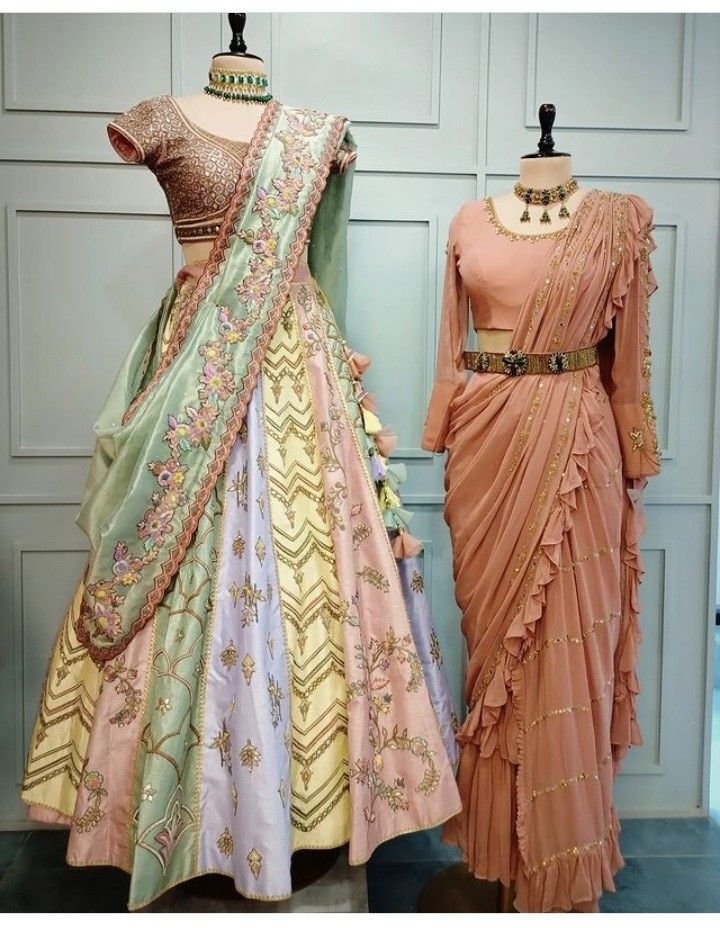
- Festive/Party Wear: For celebrations and events, often more ornate (lehengas, sarees, sherwanis).
- Outerwear: Jackets, coats, sweaters for warmth.
- Innerwear/Underwear: Basic layers.
- Style/Aesthetic: Minimalist, Bohemian, Classic, Streetwear, Vintage-inspired, Avant-garde, Traditional.
3. Fabrics & Materials in Clothing
The choice of fabric is crucial for comfort, drape, durability, and aesthetic.
a. Natural Fibers:
- Cotton: Most widely used. Breathable, soft, absorbent, durable, and affordable. Organic cotton is gaining popularity due to environmental concerns.
- Silk: Luxurious, soft, lustrous, and drapes beautifully. Varieties include Mulberry silk, Tussar silk, Kanchipuram silk, Chanderi silk, etc.
- Linen: Strong, absorbent, and dries faster than cotton, known for its crisp texture and breathability, ideal for summer.
- Wool: Warm, durable, and resilient, derived from sheep and other animals.
- Hemp: Eco-friendly, durable, and softens with wear.
- Jute: Strong, coarse fiber, primarily used in accessories or as a blend.
b. Man-Made & Synthetic Fibers:
- Viscose/Rayon/Modal/Tencel (Lyocell): Regenerated cellulose fibers, known for their soft drape and silk-like feel. Tencel is particularly eco-friendly.
- Polyester: Durable, wrinkle-resistant, quick-drying, but less breathable than natural fibers. Often used in blends or for activewear.
- Nylon: Strong, elastic, and water-resistant, commonly used in sportswear and outerwear.
- Spandex/Elastane/Lycra: Highly elastic, provides stretch and comfort, often blended with other fibers.
- Georgette & Organza: Lightweight, flowing, and often sheer fabrics, popular for Indian ethnic wear.
c. Trending Fabric Aspects (India, Mid-2025):
- Sustainable Fabrics: Organic cotton, bamboo, hemp, recycled cotton/polyester, and plant-based dyes are highly sought after.
- Textured Fabrics: Materials that add tactile interest, especially sustainable ones like recycled cotton blends.
- Versatile Fabrics: Stain-resistant, water-repellent, and multi-purpose materials for diverse use.
- Natural Dyes: A move towards more environmentally friendly coloring processes.
- Revival of Traditional Indian Textiles: Banarasi, Tussar, Kanchi, Khadi, Chanderi, Ikat are being reinterpreted into modern silhouettes.
4. Indian Traditional Clothing (Key Examples)
India’s traditional clothing is incredibly diverse, reflecting centuries of regional customs, crafts, and influences.
For Women:
- Saree (Sari): The most iconic Indian garment, a long unstitched piece of fabric (typically 6-9 yards) draped around the body with a matching blouse (choli) and an optional petticoat. Styles vary vastly by region (Kanchipuram silk, Banarasi silk, Bandhani, Patola, Chanderi, etc.).
- Salwar Kameez: A popular three-piece ensemble: baggy trousers (salwar), a long tunic (kameez), and a scarf (dupatta). Many variations exist, including:
- Patiala Salwar: Pleated, baggy salwars from Punjab.
- Anarkali Suit: A long, frock-style top that flows like a dress, paired with churidar pants.
- Churidar: Tight-fitting pants that gather at the ankles.
- Sharara/Gharara: Wide-legged, flared pants, often with a joint near the knee for ghararas, paired with a short kurti.
- Lehenga Choli: A long, embroidered skirt (lehenga), a fitted blouse (choli), and a dupatta. Commonly worn for weddings and festive occasions. Similar to Ghagra Choli.
- Kurti/Kurta: A shorter tunic, versatile for everyday wear when paired with jeans, leggings, or palazzo pants.
For Men:
- Kurta Pajama: A loose, long shirt (kurta) paired with loose-fitting trousers (pajama). Versatile for casual and semi-formal occasions.
- Dhoti Kurta: A traditional outfit where the dhoti is an unstitched length of fabric draped around the waist and legs, paired with a kurta. Often worn for religious ceremonies or traditional events.
- Sherwani: A long, coat-like garment, typically knee-length or longer, often embroidered and worn for formal occasions, especially weddings.
- Bandhgala (Jodhpuri Suit): A formal jacket with a closed, band collar, blending Western tailoring with Indian aesthetics. Often worn with trousers.
- Achkan: Similar to Sherwani, but usually shorter and worn with churidars.
- Lungi/Panche: A simple wrap-around lower garment worn mostly in South India.
5. Current Fashion Trends (India, Mid-2025)
The Indian fashion scene is a vibrant mix of global influences and rich heritage.
General Trends:
- Sustainable Fashion: A dominant force. Consumers, especially Gen Z, are increasingly opting for natural, eco-friendly, and ethically produced clothing. This includes organic fabrics, natural dyes, and support for local artisans and handlooms. The second-hand apparel market is also growing rapidly due to sustainability awareness.
- Fusion Wear (Indo-Western): The blending of traditional Indian elements with Western silhouettes is extremely popular (e.g., sarees with crop tops, kurtas as dresses, dhoti pants with blazers, embroidered denim, co-ord sets with desi prints).
- Comfort-Driven Styling (Athleisure): Post-pandemic, comfort remains king. Athleisure continues to thrive, with versatile pieces that can go from workout to casual outings.
- Bold Prints and Patterns: Expect vibrant geometric, abstract, floral, and even digital prints (often inspired by Indian mythology/architecture).
- Bright Colors & Metallics: Neon shades (electric blue, lime green, hot pink) and shimmering metallic fabrics are adding a glamorous touch.
- Monochromatic Dressing: Wearing a single color head-to-toe for a cohesive, stylish look.
- Maximalism: Opulence, vibrant colors, bold patterns, and layered textures making a statement.
- Intricate Embroidery & Embellishments: Traditional Indian embroidery (Zardozi, Phulkari, Chikankari, Mirror work) is prominent, often on both ethnic and modern pieces. Sequins are also popular.
- Gender-Neutral Clothing: Unisex silhouettes, relaxed fits, and neutral tones are gaining traction.
Women’s Specific Trends:
- Co-ord Sets: Matching top and bottom sets, often in traditional fabrics or prints, offering effortless style.
- Modern Sarees: Unusual drapes, asymmetrical cuts, and contemporary blouses (e.g., off-shoulder, corset tops) are refreshing the classic saree. Pre-stitched sarees are also popular for convenience.
- Statement Dupattas: Pairing elaborate dupattas with minimalist kurtas.
- Pastel & Earthy Tones: Soft hues gaining popularity for everyday and festive wear.
- Dramatic Sleeves & Layered Silhouettes: Playing with proportion and volume.
Men’s Specific Trends:
- Athleisure 2.0: Tailored tracksuits, advanced technical fabrics, and functional outerwear that transitions from gym to street.
- Revival of Traditional Tailoring: Modernized suits with looser cuts, unexpected fabrics, and clean detailing.
- Retro-Inspired Styles: ’70s and ’90s influences with wide-leg pants, vintage denim, and updated sportswear.
- Textural Layers: Combining different fabric textures in layered outfits.
- Contemporary Sherwanis: Lighter fabrics, pastel tones, and floral/Mughal embroidery for modern weddings.
- Indo-Western Fusion: Blazers with dhoti pants, asymmetrical kurtas with trousers, Bandhgalas with sneakers.
- Nehru Jackets: Timeless classic, seen in textured fabrics like velvet and brocade, often in pastels.
- Dhoti Pants & Jodhpuri Trousers: Paired with kurtas, blazers, or Angrakha-inspired tops.
Kids’ Fashion Trends:
- Eco-Friendly & Sustainable Kids wear: Organic cotton, bamboo fabric, and plant-based dyes for comfort and ethical choices.
- Bold Prints & Playful Aesthetics: Quirky patterns, oversized florals, geometric shapes, and animal-inspired graphics.
- Modern Ethnic Wear with a Contemporary Spin: Fusion styles like peplum kurtas with dhoti pants, embroidered Nehru jackets, and flowy sharara sets for festive wear.
- Comfort-Driven Athleisure: Stretchable leggings, jogger sets, and relaxed sweatshirts.
- Gender-Neutral Clothing: Simple, versatile unisex styles in neutral tones.
- Personalized Clothing: Items featuring kids’ names or favorite characters.
- Tech-Enhanced Clothing: Fabrics that regulate temperature or repel stains, even interactive elements like LED lights.
- Upcycled and Pre-loved Clothing: Parents increasingly embracing circular fashion.
6. The Business of Clothing Online
Selling clothing online requires a strong understanding of:
- Sizing & Fit: A major challenge. Clear sizing guides (with measurements), model sizing information, and customer reviews on fit are critical.
- Fabric Representation: High-quality photos and videos are essential to convey fabric texture, drape, and color accurately.
- Trend Responsiveness: The fashion industry moves fast. Businesses need agile supply chains to respond to emerging trends.
- Inventory Management: Balancing stock levels to meet demand without overstocking.
- Returns Management: A robust and clear return/exchange policy is crucial for customer satisfaction.
- Sustainability Claims: If promoting sustainability, genuine transparency and possibly certifications are needed to build trust and avoid “greenwashing” accusations.
By offering a well-curated selection of both clothing and jewelry, an online business can provide a holistic styling experience, catering to the evolving preferences of the Indian consumer.